AlphaBaths
Letting homeowners design their new bathroom before anyone picks up a drill.
WordPress
Configurator
Role
Web Developer
Timeline
5 weeks
team
Owner, sales team, me
platform
WordPress
The Real Problem
AlphaBaths remodels bathrooms and installs walk-in tubs in Ohio. Their customers are often older homeowners making a big decision, and the hardest part of the sale was imagination. 'What would the white marble look like with the nickel faucet?' is a question a brochure can't answer.
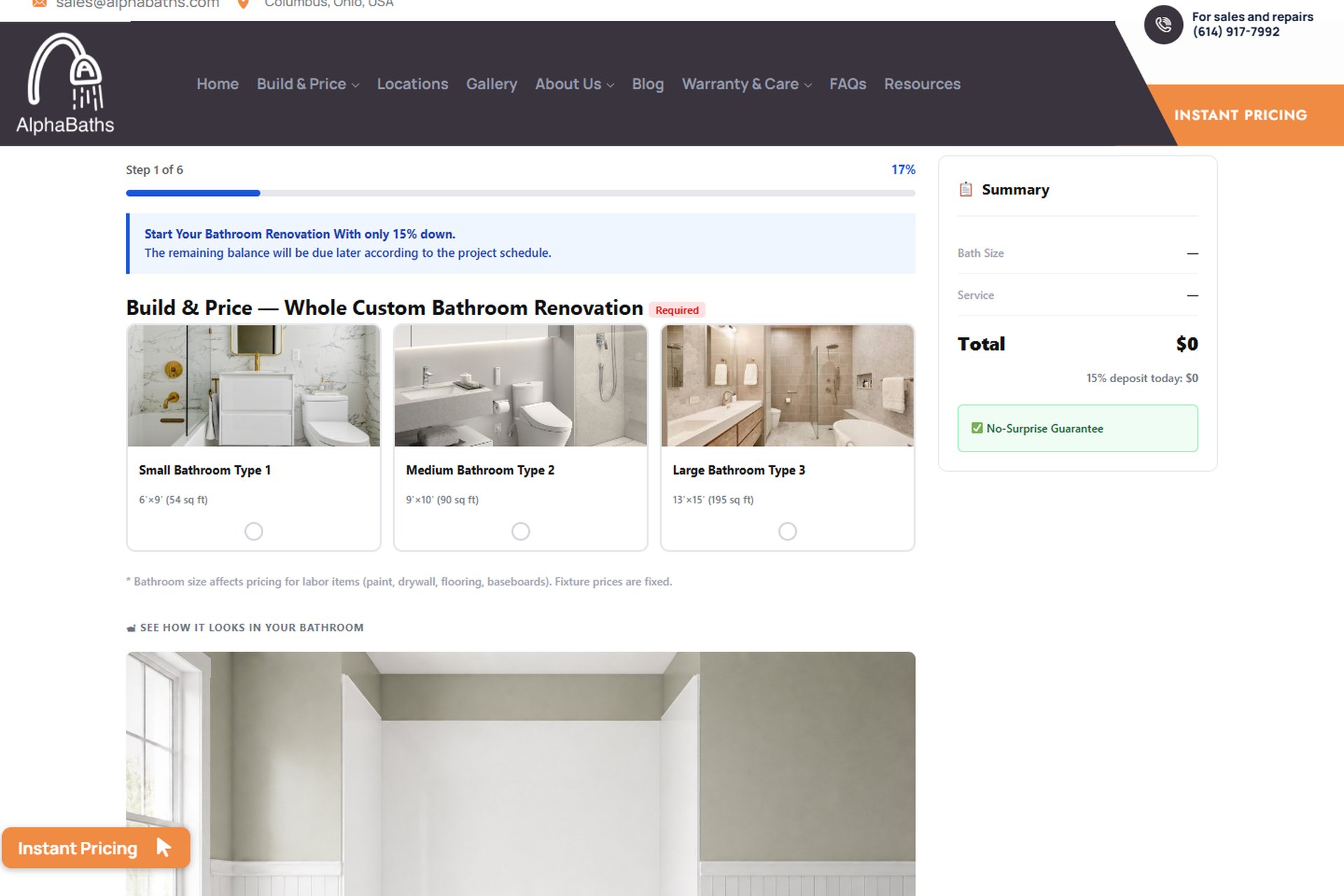
Their pricing calculator asked for choices as plain text: a wall colour here, a tub model there. People filled it in, but they couldn't see what they were choosing.
The sales team kept hearing the same things:
'I can't picture it.'
'Can you send me a photo of that combination?'
'I submitted the form, did you get it?'
That last one turned out to matter as much as the first two.
Finding the Fix
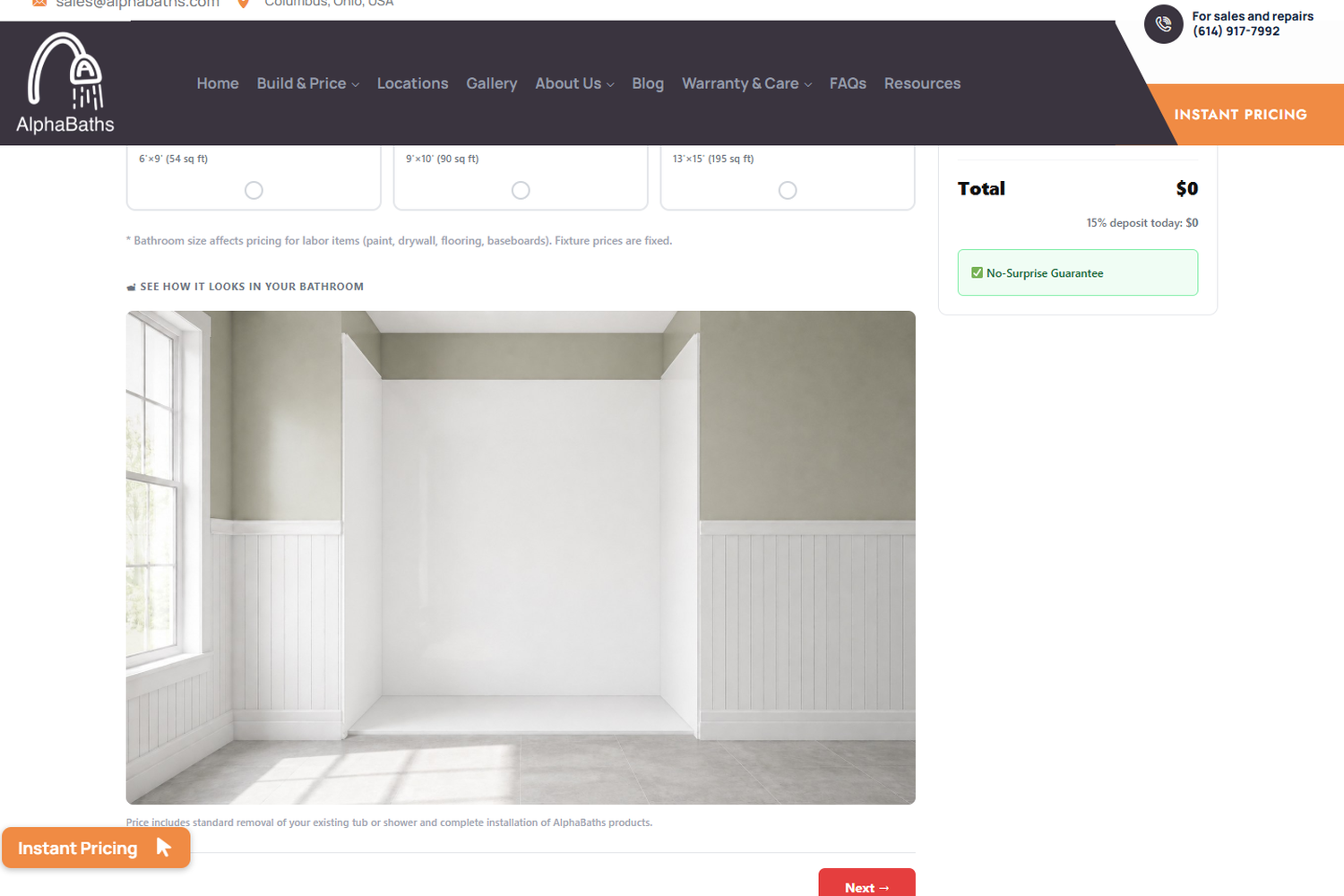
Instead of 3D, I built the bathroom in layers, like a stack of transparent sheets. A background room, then the tub, then the faucet, then shelves, niches and grab bars, each one a separate image with a transparent background, drawn onto an HTML canvas in the right order.
41 layered images. Backgrounds, tubs, faucets in chrome, matte black and nickel, shelves, 15 wall niches and grab bars. Each one checked and approved with the client before it went live.
A placement system. Every layer has exact coordinates for every tub model. It took more than twenty rounds of adjustments to make a grab bar sit where a real installer would put it.
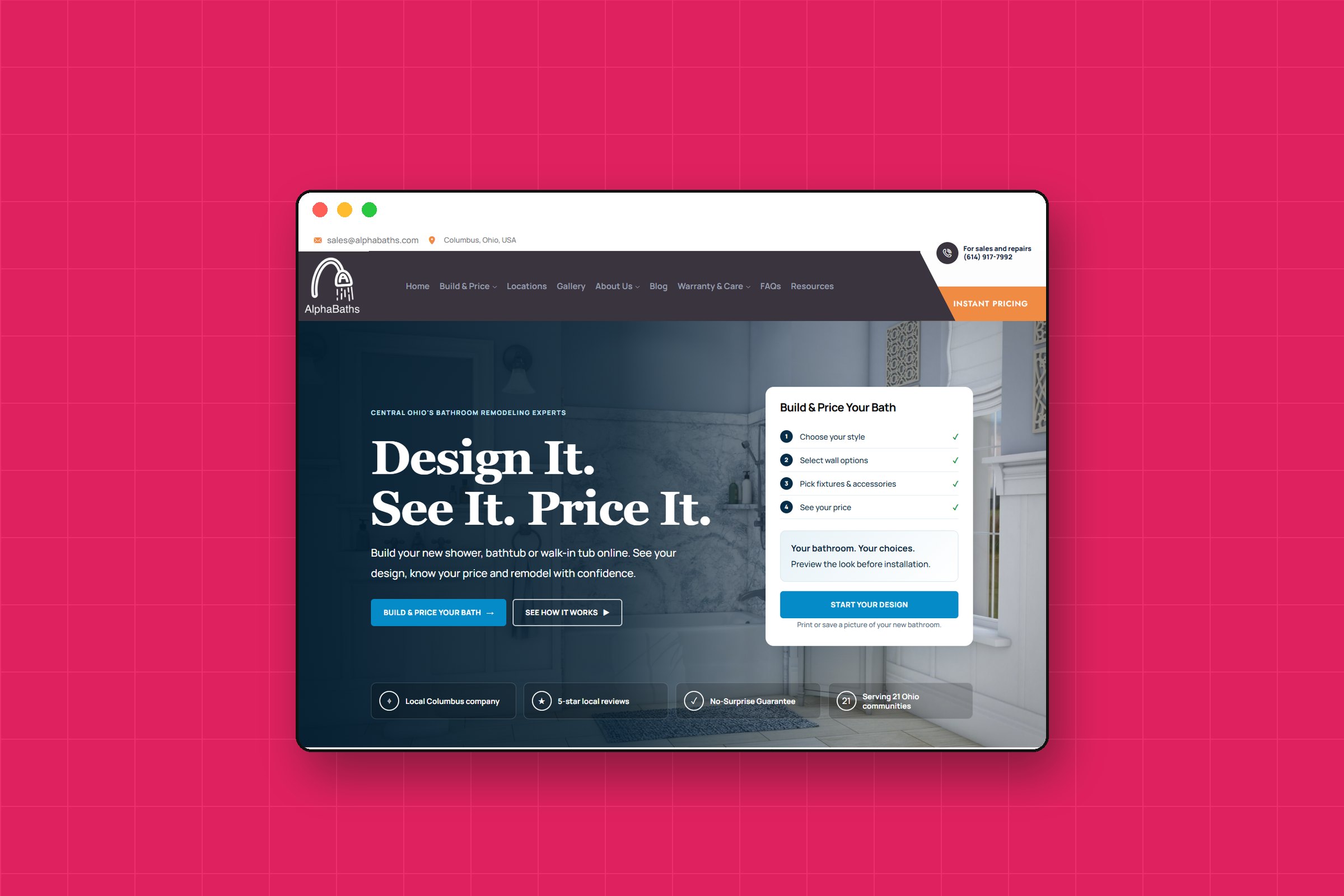
Step by step. The configurator walks people through one decision at a time, with the picture updating at each click.
At the end, the finished design is saved as an image and emailed with the quote, so the sales team sees exactly what the customer built.
A print button lets homeowners put their dream bathroom on the fridge.
Every form was tested end to end, because a beautiful configurator is useless if the lead never arrives.
What Actually Happened
The first version worked in the browser and failed in the inbox: the design image didn't reach the email. I traced it to three separate root causes and fixed each one, then tested again with real submissions.
While I was in there, I found pricing quote submissions that never reached the CRM and fixed that too. I also rebuilt the reviews section to match the site, and cleaned up the SEO: a redirect loop that had been hit 467 times, stale redirect rules, and pages that search engines should never have seen.
What Changed
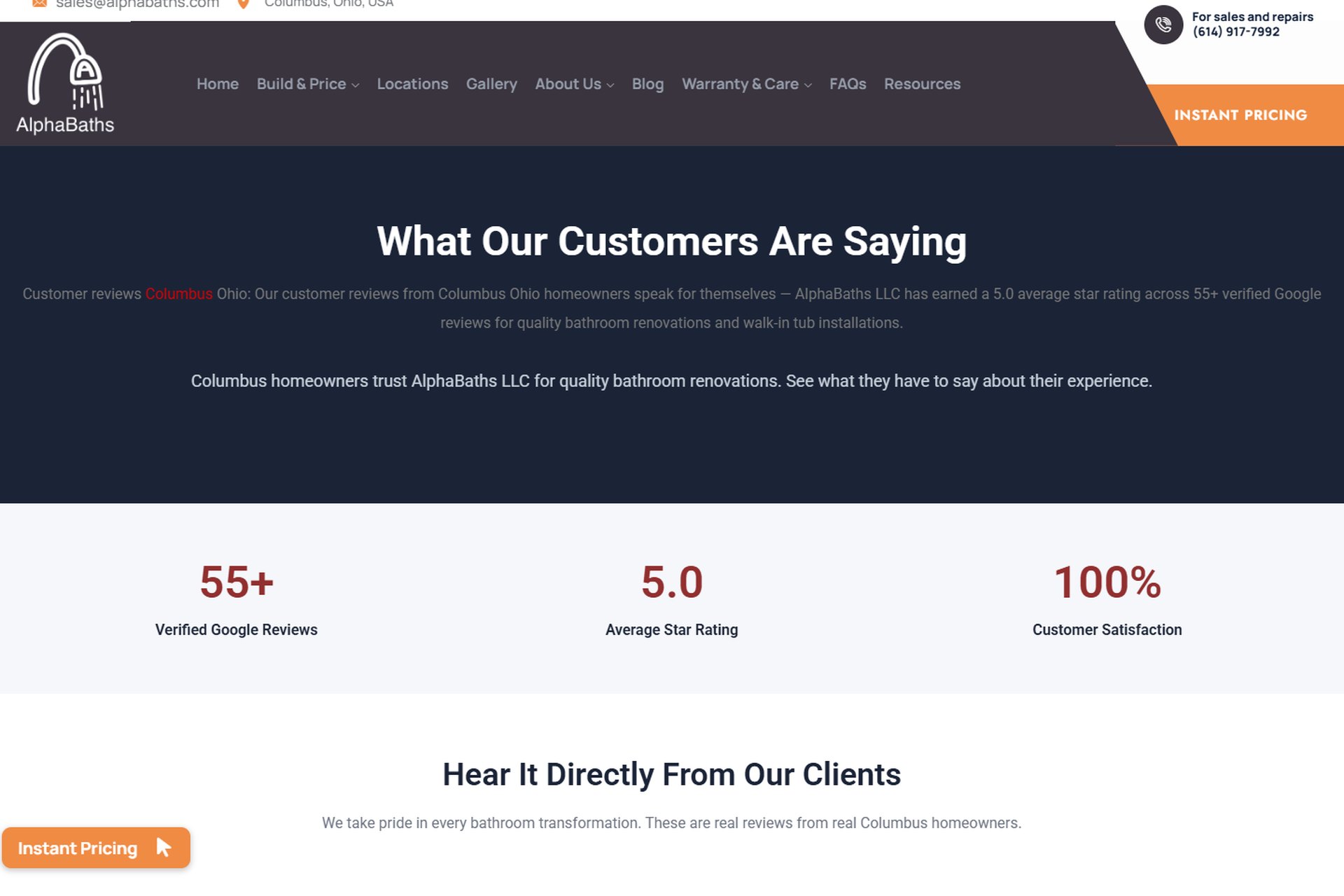
Homeowners can now see their bathroom before they talk to anyone: pick the walls, the tub, the faucet finish and the accessories, and watch the room change as they click.
41 product layers, every one matching the real catalogue.
The finished design arrives with every quote.
All 11 live forms tested end to end, every one passing.
The sales conversation starts in a different place now. Not 'what would it look like?' but 'when can you start?'
What I Had to Work With
An existing WordPress site. Elementor pages, Gravity Forms and WPForms, a CRM, and years of plugins. Rebuilding the site wasn't on the table.
No 3D models. There was no budget for a 3D product library, so every tub, faucet and shelf had to work as a flat image.
Real products, exact names. Every option in the configurator had to match the real catalogue, or the quote would be wrong.
A live business. The site takes leads every day, so nothing could break while I worked.
What I'd Do Differently
I'd lock the placement system before producing the images. I adjusted coordinates over many rounds because each new asset changed what looked right. A fixed grid agreed upfront would have saved days.
What I Learned
The picture sells, the plumbing closes. The configurator gets attention, but the fixes to email delivery and the CRM are what turned that attention into booked appointments.
Constraints make better ideas. Without a 3D budget, layered images turned out to be faster, lighter and easier for the client to update.